.png)
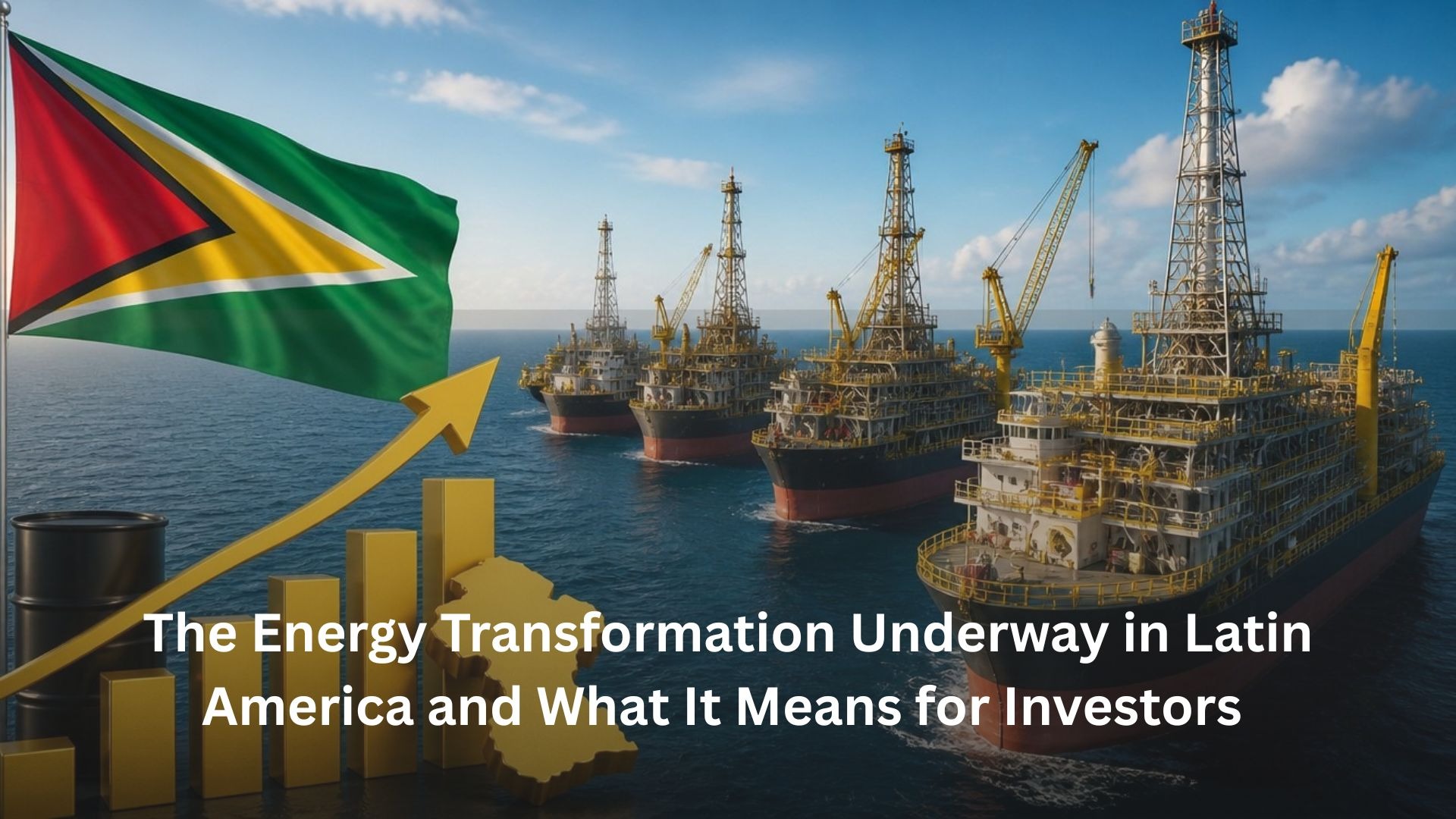
Table of Contents
Latin America is emerging as one of the world’s most consequential energy investment destinations, driven by a rare convergence of hydrocarbon expansion and clean energy acceleration. The region now accounts for a significant share of global crude oil production growth, with Brazil, Guyana, and Argentina together contributing 28% of the world’s incremental output in 2025. At the same time, more than 65% of Latin America’s electricity already comes from renewable sources, roughly double the global average, supported by hydropower dominance and rapid solar and wind deployment. This dual-track transformation is reshaping capital flows, sovereign financing, infrastructure development, and long-term energy security, creating both compelling opportunities and complex risks for institutional investors.
Why Latin America Is Entering a New Energy Era
Latin America’s energy landscape is undergoing structural change driven by resource abundance, demographic advantages, and evolving policy frameworks. Countries across the region are leveraging vast hydrocarbon reserves alongside world-class renewable resources to attract foreign capital and diversify global energy supply chains. Government reforms in key markets such as Argentina’s investment incentive regime and Brazil’s regulatory advances for offshore wind are improving investor confidence and reducing entry barriers. Global energy demand growth, supply diversification imperatives, and the strategic repositioning of energy-importing nations are further elevating Latin America’s role in the global energy architecture.
 Offshore Oil Discoveries Are Redefining Regional Growth
Guyana’s Rapid Rise as an Oil Producer
Guyana has become one of the fastest-growing oil economies globally, with production from the ExxonMobil-operated Stabroek Block exceeding 900,000 barrels per day by the end of 2025. Four floating production, storage, and offloading vessels (FPSOs) Liza Destiny, Liza Unity, Prosperity, and ONE GUYANA supported 260 crude oil lifts in 2025, including 32 government entitlement lifts. ExxonMobil’s 45% operating interest generated US$8.1 billion in revenue from 102 crude lifts, underscoring the fiscal transformation underway. Against a backdrop of declining global high-impact exploration drilling, Guyana’s ability to convert discoveries into large-scale production positions it as a strategic supply hub for international markets.
Suriname’s Emerging Offshore Opportunity
Suriname is rapidly emerging as a complementary offshore oil frontier, with Apache’s Block 58 discoveries estimated at 1.4 billion barrels of oil equivalent. Morgan Stanley forecasts first oil in 2026, with successive phases ramping up in one-year increments thereafter. Together with Guyana and Brazil’s pre-salt developments, Suriname is helping to establish the Guyana–Suriname basin as one of South America’s most active deepwater plays. Capital requirements remain significant, but the scale of discovered resources and proximity to existing infrastructure support a compelling long-term investment outlook.
 Established Energy Leaders Continue to Expand
Brazil’s Dual Strategy of Oil and Renewables
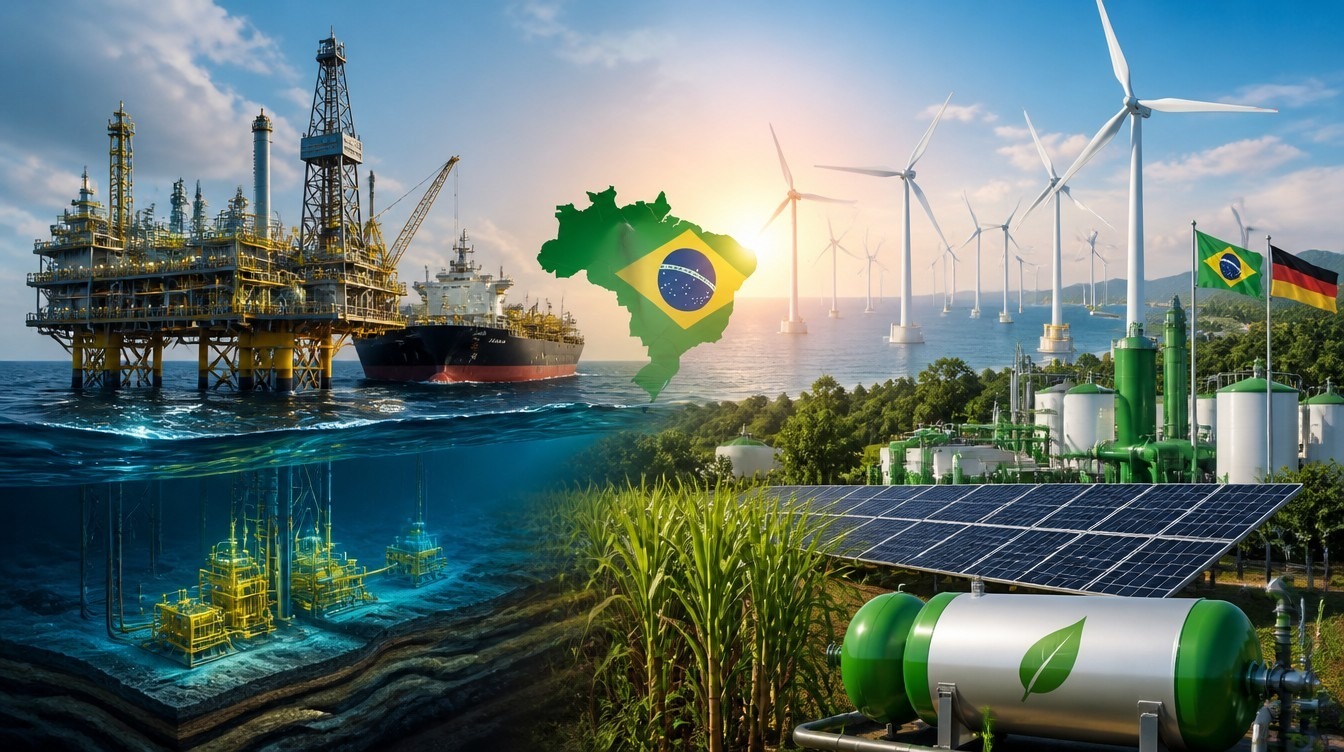
Brazil continues to expand offshore oil production while accelerating investments in renewable energy and clean technologies. Petrobras and international partners are advancing pre-salt developments in the Santos and Campos basins, leveraging deepwater expertise to maintain production growth and energy security. Simultaneously, Brazil is positioning itself as a future offshore wind leader, with 247 GW of projects under evaluation and regulatory frameworks progressing to unlock investment. Biofuels, solar, and green hydrogen initiatives supported by public–private partnerships with German and other international counterparts further diversify Brazil’s energy portfolio and enhance its role in the global energy transition.
Argentina and the Vaca Muerta Opportunity
Argentina’s Vaca Muerta shale formation is driving a significant oil and gas boom, supported by high-quality resources, government reforms, and strong private investment. Transportadora de Gas del Sur (TGS) announced a US$3 billion investment in a natural gas liquids project in Vaca Muerta, targeting US$1.2 billion in annual export revenues and contributing to a goal of 15 million cubic meters per day by 2031–2032. Associated gas production from Vaca Muerta doubled in 2025, reaching a record 26.7 million cubic meters per day in January 2026, creating opportunities for NGL fractionation and LNG exports. Argentina posted an energy trade surplus of US$6.068 billion in January–October 2025, with projections of US$8–10 billion in 2026, driven largely by Vaca Muerta output. Infrastructure expansion including pipelines, processing plants, and floating LNG units remains critical to monetizing this potential and avoiding flaring.
Venezuela’s Gradual Return to Global Energy Markets
Venezuela is gradually re-entering global energy supply chains, albeit with significant constraints. Policy evolution under shifting geopolitical dynamics, including U.S. regulatory adjustments and regional diplomatic engagement, has created limited but notable openings for international operators. Geopolitical considerations, sanctions regimes, and domestic institutional capacity continue to shape investment feasibility and risk profiles. While large-scale capital inflows remain constrained, potential future scenarios include phased reintegration of Venezuela’s heavy oil and gas resources into regional supply chains, contingent on sustained policy stability and multilateral support. Investors should monitor developments closely but maintain disciplined risk assessment given ongoing uncertainties.
 Renewable Energy Is Becoming a Major Investment Theme
Latin America’s renewable energy sector is attracting growing institutional attention, with solar, wind, hydropower, battery storage, transmission infrastructure, green hydrogen, and sustainable fuels emerging as key investment themes. The region’s renewable electricity share of over 65% is supported by hydropower’s 45% contribution and rapid solar and wind expansion, now accounting for around 17% of generation. Since 2014, more than US$250 billion in green, social, and sustainability bonds have been issued in Latin America and the Caribbean, reflecting deepening capital market support for clean energy. However, clean energy investment totaled US$70 billion in 2025, only about 4% of global spending, leaving a significant gap relative to the IEA’s estimated US$150 billion per year needed by 2030. Over 1,000 large-scale renewable projects worth more than US$500 billion are in early development, but only 176 have reached construction, highlighting both opportunity and execution risk.
Financing the Energy Transformation
Financing Latin America’s energy transformation relies on a sophisticated mix of project finance, green bonds, sustainable finance, multilateral funding, private equity, infrastructure funds, public–private partnerships, and export credit agencies. Development finance institutions and blended finance vehicles such as the Latin America and Caribbean Investment Fund (LACIF) are mobilizing capital for grid infrastructure, renewable generation, and clean technology deployment. Capital markets are increasingly supporting the transition through sustainability-linked instruments, though high interest rates, currency volatility, and limited domestic credit capacity remain constraints. Institutional investors are well-positioned to provide long-term capital for transmission upgrades, battery storage, and green hydrogen projects that align with ESG mandates and infrastructure return profiles.
Risks Investors Should Carefully Evaluate
Investors must carefully evaluate political risk, regulatory uncertainty, commodity price volatility, currency fluctuations, ESG challenges, climate risks, infrastructure constraints, fiscal policy shifts, and social license to operate. High interest rates and limited domestic financing capacity elevate funding costs and execution risk for large-scale projects. Geopolitical dynamics including U.S. policy shifts, regional diplomatic tensions, and global supply chain disruptions add layers of complexity to investment decisions. Balanced risk assessment requires scenario analysis, local stakeholder engagement, and robust due diligence on regulatory trajectories and fiscal frameworks.
What This Means for Global Investors
For global institutional investors, Latin America’s energy transformation offers portfolio diversification, long-term infrastructure returns, energy security exposure, commodity upside, and ESG-aligned opportunities. Emerging market allocation strategies can benefit from selective exposure to offshore oil, LNG, renewable generation, transmission, and green hydrogen projects with strong cash flow profiles and multilateral support. Private capital will be essential to closing the region’s US$80 billion annual clean energy investment gap, creating niches for infrastructure funds, pension capital, and sovereign wealth vehicles. Disciplined risk management, local partnership structures, and alignment with national energy strategies will be critical to capturing value over the next decade.
Conclusion
Latin America is becoming a strategic global energy region where hydrocarbon expansion and clean energy growth coexist and reinforce investment opportunities. The long-term outlook is shaped by resource endowments, policy momentum, and capital market innovation, but success requires disciplined risk assessment and selective capital deployment. For institutional investors, the region offers a rare combination of scale, diversification, and transition-aligned returns, provided that execution risks and geopolitical uncertainties are rigorously managed.
Latin America is emerging as a pivotal force in the global energy transition, combining major offshore oil discoveries with accelerating investments in renewable energy and critical infrastructure. This GBM analysis explores how developments across Guyana, Suriname, Brazil, Argentina, and Venezuela are reshaping capital flows, project finance, ESG investing, and long-term opportunities for institutional investors in one of the world's most dynamic energy markets.