.png)
Table of Contents
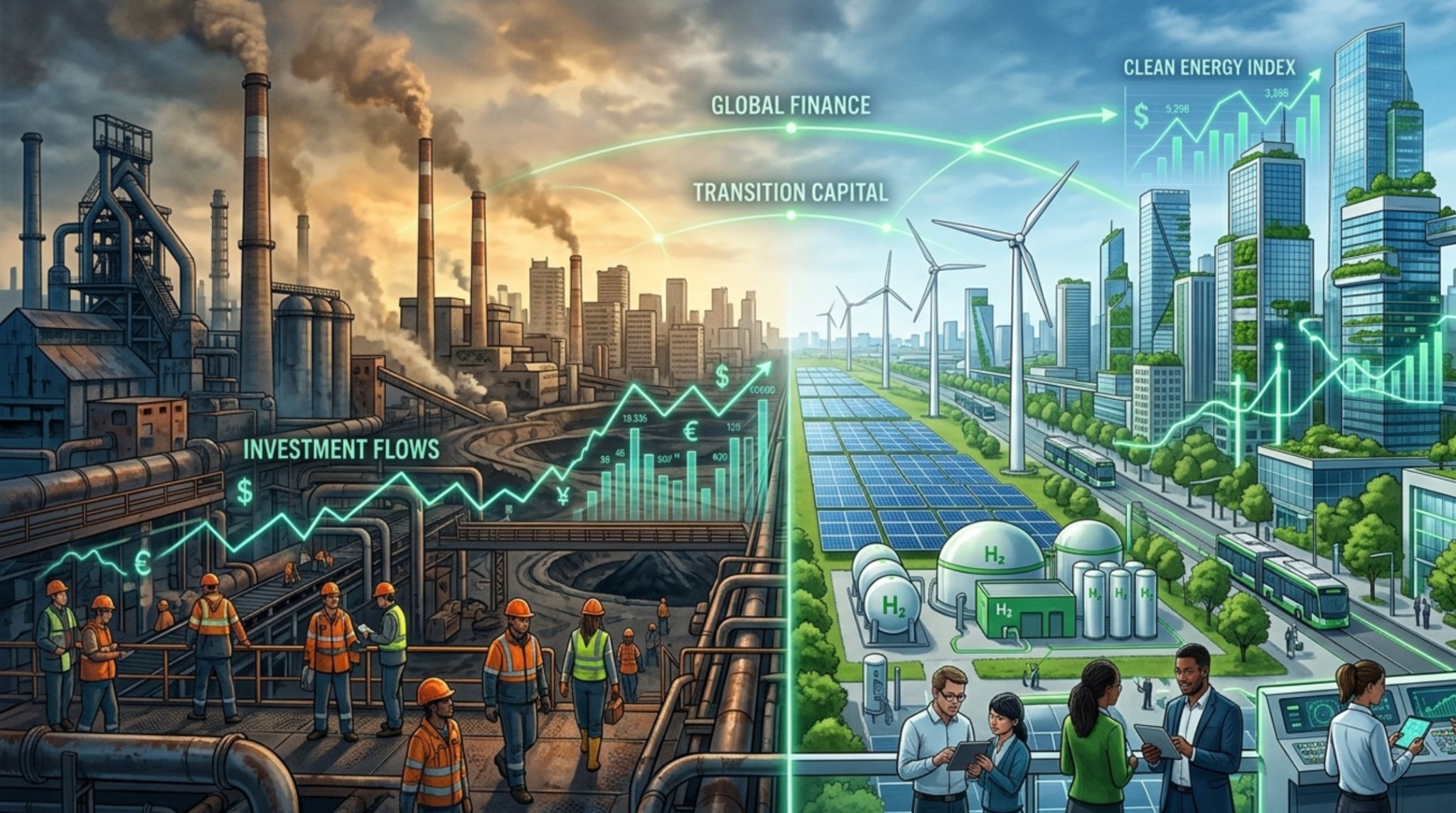
Wholesale finance trends are reshaping global banking faster than at any point in the past decade. As of early 2026, digital innovation, regulatory shifts, and ecosystem-driven models are redefining how capital is deployed, risk is distributed, and liquidity is accessed across institutional banking.
For corporate and investment banking leaders, this transformation is no longer theoretical. AI-led automation, tokenisation of real-world assets, private credit expansion, and ESG-linked financing are actively altering balance sheets, deal structures, and capital market strategies worldwide. What’s emerging is a more interconnected, capital-efficient global banking system built for scale, speed, and resilience.
Together, these wholesale finance trends are transforming global banking into a more interconnected, capital-efficient system.
The Changing Role of Wholesale Banking in Global Finance
Wholesale banking has traditionally centered on large corporates, financial institutions, and governments. Today, that scope has widened. Corporate and investment banking teams are now expected to serve as orchestrators across capital markets, private equity, private credit, and fintech platforms.
This evolution is visible across major financial hubs and emerging markets alike, from Dubai’s financial services ecosystem to capital market event circuits in CEE and Latin America. Investment banking conferences and finance conferences in 2025 increasingly focus on technology integration, regulatory adaptation, and cross-border capital flows rather than standalone products.
At the heart of this shift lies one core objective: doing more with less capital while managing risk more intelligently.
Why These Wholesale Finance Trends Matter in 2025–2026
Wholesale banking is under simultaneous pressure from tighter capital regulations, higher interest rates, and rising client expectations for speed and transparency. Basel III norms, combined with volatile global markets, are forcing banks to rethink how they originate, price, and distribute risk.
At the same time, emerging markets finance is gaining momentum, particularly in hubs like Dubai, CEE, and Latin America. This has made institutional innovation not just a competitive advantage, but a necessity. Wholesale finance trends are no longer regional experiments. They are global imperatives shaping the future of banking.

How AI and Automation Are Transforming Wholesale Banking
AI has moved from experimentation to infrastructure within wholesale finance. Banks now deploy machine learning models for real-time risk assessment, fraud detection, and underwriting across trade finance, supply chain finance, and large-ticket corporate lending.
The real impact isn’t just automation. Its decision velocity. By analyzing vast datasets in seconds, AI reduces dependency on manual reviews and legacy workflows. This matters as regulatory expectations tighten under frameworks like Basel III, where capital efficiency and risk-weighted asset optimization are non-negotiable.
In global investment banking and emerging markets finance, AI-driven models are also improving counterparty risk evaluation and early-warning signals. The result is faster deal execution with tighter risk controls, a theme increasingly discussed at investment banking conferences and M&A conferences worldwide.
AI automation is no longer optional. It’s the baseline for competing in institutional banking.
Tokenization and Digital Assets: Liquidity Without Friction
Tokenization is one of the most disruptive forces in wholesale finance today. The tokenization of real-world assets (RWAs), including receivables, bonds, and funds, has surpassed $36 billion on-chain. That figure matters not just for its size, but for what it enables.
Tokenized assets allow fractional ownership, instant settlement, and continuous liquidity. For wholesale banking, this changes how balance sheets are managed and how capital markets operate. Receivables that once sat idle can now be converted into investable instruments. Bonds can trade with reduced settlement risk. Liquidity moves closer to real time.
Deposit tokens and central bank digital currencies (CBDCs) are reinforcing this shift by providing 24/7 institutional settlement rails. Reconciliation delays, long accepted as unavoidable, are being engineered out of the system. Stablecoins are also gaining traction for cross-border payments, cutting transaction costs by up to 10 percent and accelerating settlement cycles.
These developments are a recurring focus at capital market events and finance conferences in 2025, especially those centered on emerging markets where settlement inefficiencies have historically constrained growth.
Ecosystem Partnerships: From Lenders to Platform Orchestrators
Wholesale banks are no longer trying to do everything themselves. Instead, they’re building ecosystems.
The model is simple but powerful. Banks move away from holding all risk on their balance sheets and toward orchestrating partnerships with fintechs, private credit funds, and technology platforms. APIs enable real-time payments, embedded finance, and data sharing across the value chain.
This approach has a tangible impact on MSMEs. Invoice pooling, supply chain finance platforms, and digital trade finance tools are expanding access to working capital, especially in emerging markets. By collaborating rather than competing, banks extend their reach without proportionally increasing capital consumption.
This ecosystem-led strategy is a frequent theme at financial services networking events, private equity conferences, and investment banking events in Dubai and other global hubs. The consensus is clear: scale now comes from integration, not accumulation.

ESG Integration: Sustainability as a Financial Variable
ESG is no longer a side conversation in wholesale finance. It directly influences pricing, capital allocation, and risk assessment.
In India alone, sustainable debt has crossed $55 billion. That growth reflects a broader global shift where lenders evaluate supply-chain sustainability alongside traditional credit metrics. Companies with verifiable ESG performance increasingly benefit from lower borrowing costs, often referred to as a greenium.
Regulatory frameworks are reinforcing this trend. Schemes like India’s Carbon Credit Trading Scheme (CCTS) link financing terms to measurable sustainability outcomes. For wholesale banks, this introduces a new dimension of risk pricing and opportunity creation.
ESG integration is now a core agenda item at finance conferences and financial services networking events in 2025. For corporate and investment banking teams, sustainability data is becoming as critical as financial statements.
Private Credit Expansion: Redefining Risk Distribution
Private credit has evolved from a niche alternative into a central pillar of wholesale finance. As interest rates remain elevated and Basel III capital requirements tighten, banks are recalibrating their role.
Rather than holding risk, banks increasingly focus on origination, structuring, and syndication. Asset-based finance, including trade receivables securitization (TRS), allows invoices to be transformed into investable products. This unlocks liquidity for MSMEs while distributing risk across institutional investors.
Private equity and private credit funds benefit from access to structured deal flow. Banks benefit from capital-light models that preserve returns on equity. This alignment explains why private equity capital networking conferences and private credit discussions dominate agendas at M&A conferences and investment banking conferences in 2025.
The result is a more modular financial system where risk is shared, priced dynamically, and matched with the right capital provider.
How These Trends Converge
What makes these wholesale finance trends transformative isn’t their individual impact. It’s how they reinforce one another.
AI enables faster underwriting of tokenized assets. Tokenization improves liquidity for private credit structures. Ecosystem partnerships expand ESG-linked financing at scale. Regulatory pressure accelerates innovation rather than slowing it down.
For global banking, this convergence marks a shift from linear value chains to interconnected financial networks. Capital moves faster. Risk is distributed smarter. Technology becomes infrastructure, not differentiation.
This is why global investment banking hubs, from Dubai to CEE and Latin America, are seeing renewed interest in finance conferences, capital market events, and financial services networking. Institutions are no longer just exchanging deals. They’re aligning on how the system itself is evolving.
The Road Ahead for Wholesale Finance
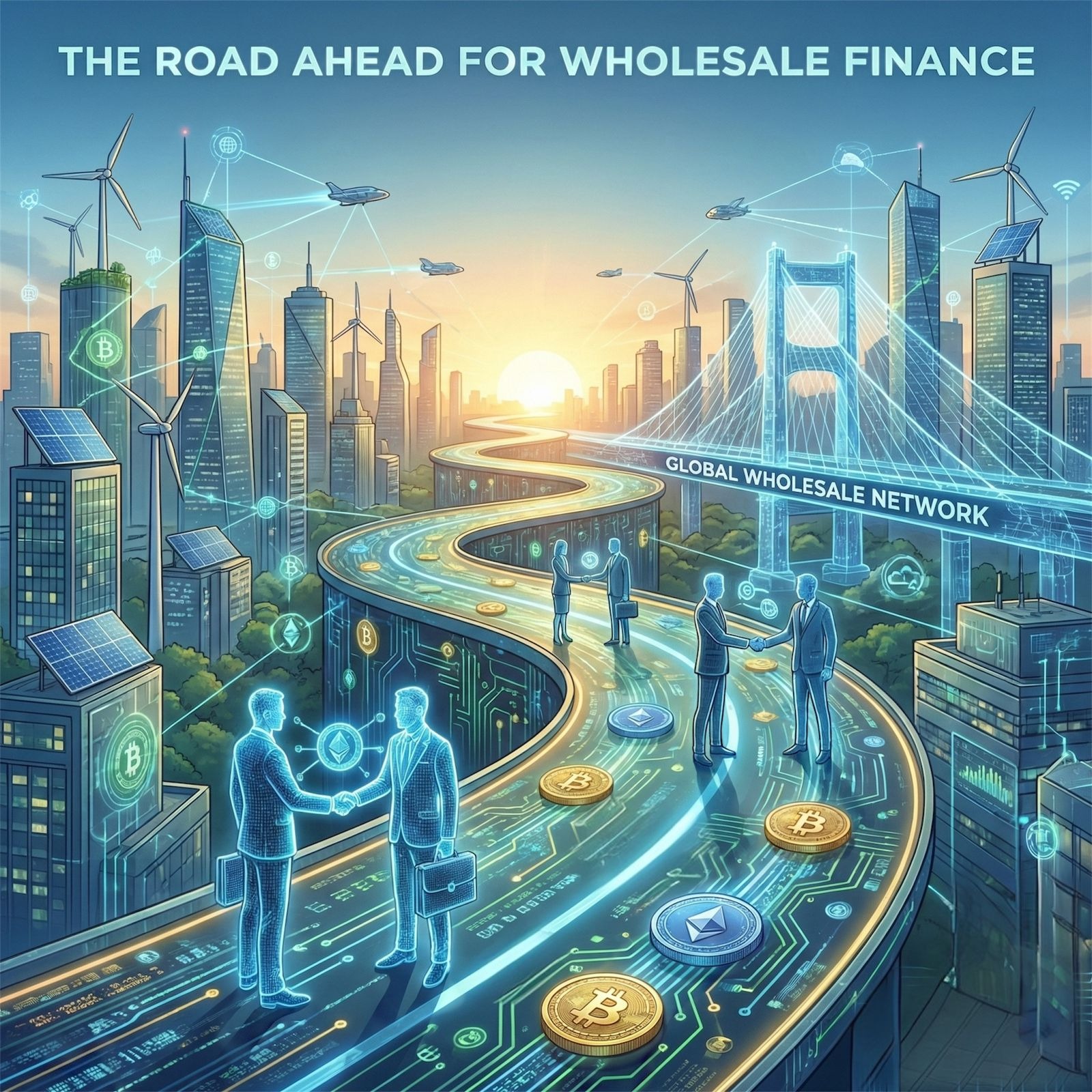
Looking ahead, wholesale banking will continue to move toward platform-based models, real-time finance, and capital-light growth. Institutions that adapt will gain flexibility, resilience, and access to broader markets. Those that don’t will struggle with rising costs, regulatory drag, and slower execution.
For corporate and investment banking leaders, the challenge is no longer understanding these trends. It’s operationalizing them at scale.
Frequently Asked Questions on Wholesale Finance Trends
What is wholesale finance in global banking?
Wholesale finance refers to banking services provided to large corporates, financial institutions, governments, and intermediaries. It includes trade finance, capital markets, structured finance, and institutional lending.
How is technology changing wholesale banking?
AI, automation, and blockchain are enabling real-time risk assessment, faster underwriting, tokenized assets, and near-instant settlement, improving efficiency and capital utilization.
Why is private credit growing in wholesale finance?
Private credit allows banks to distribute risk rather than hold it, aligning with Basel III capital requirements and higher interest rate environments while expanding liquidity access.
How does ESG impact wholesale finance decisions?
ESG metrics now influence lending terms, pricing, and capital access. Sustainable firms often benefit from lower borrowing costs through verified sustainability-linked frameworks.
Global Banking Markets (GBM)
Global Banking Markets (GBM) sits at the intersection of capital, connectivity, and insight. Through curated finance conferences, investment banking events, M&A conferences, and private equity networking platforms, GBM brings together decision-makers shaping the future of wholesale finance and global banking.
From emerging markets finance in Dubai to capital market events across CEE and Latin America, GBM creates environments where institutions, investors, and innovators exchange more than contacts. They exchange direction.
If wholesale finance is being reshaped by collaboration, technology, and smarter capital allocation, GBM is where those conversations turn into strategy.